
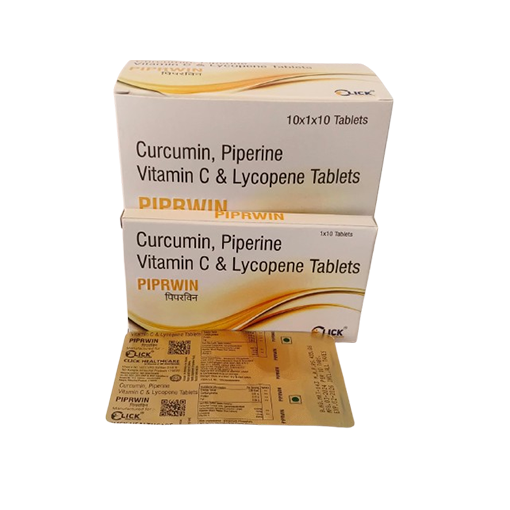
PIPRWIN is a nutritional supplement primarily used to boost immunity, reduce inflammation, support joint health, and provide overall cellular protection through its powerful antioxidant properties.
Click Healthcare Piprwin: High-Potency Antibiotic for Serious Bacterial Infections
Piprwin from Click Healthcare is a crucial, high-strength injectable antibiotic often utilized in hospital and critical care settings for the treatment of severe and complex bacterial infections. This formulation is a combination of two powerful agents: Piperacillin (a broad-spectrum penicillin) and Tazobactam (a beta-lactamase inhibitor). This synergistic combination is essential for combating infections caused by many Gram-positive, Gram-negative, and anaerobic bacteria, particularly those that have developed resistance to standard antibiotics.
The effectiveness of Piprwin lies in the intelligent pairing of its active ingredients. Piperacillin works by interfering with the synthesis of the bacterial cell wall, leading to the lysis (bursting) and death of the bacteria. However, many bacteria produce an enzyme called beta-lactamase, which destroys Piperacillin before it can act. This is where Tazobactam comes in: it irreversibly binds to and inhibits the beta-lactamase enzyme, effectively protecting Piperacillin and allowing it to successfully penetrate and kill the resistant bacteria.
Due to its enhanced spectrum of activity, Piprwin is a frontline treatment for serious polymicrobial infections. It is commonly prescribed for conditions such as severe pneumonia (hospital-acquired or ventilator-associated), intra-abdominal infections, complicated skin and soft tissue infections, and septicaemia (blood poisoning). Its broad coverage and ability to overcome common resistance mechanisms make it indispensable when the infectious cause is not yet fully identified or when multiple pathogens are suspected.
Manufactured by Click Healthcare, a dedicated division of MK Healthcare, Piprwin ensures the availability of a high-quality, reliable formulation for injection. Because it is a powerful, reserved-class antibiotic, it must be administered under strict medical supervision in a clinical setting. The appropriate dosage and duration are critical and must be carefully determined by a healthcare professional based on the severity and site of the infection to ensure complete eradication of the bacteria and to minimize the risk of further antimicrobial resistance.