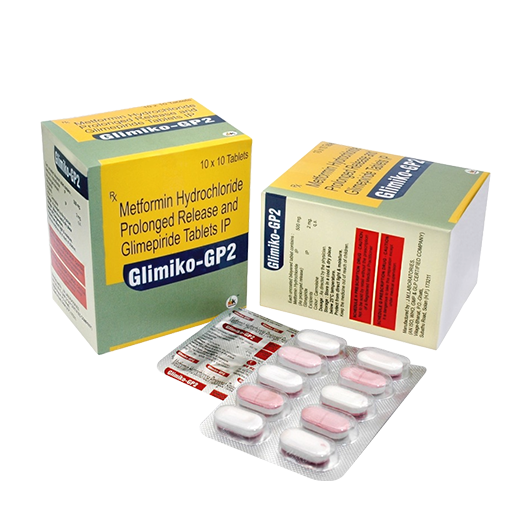
GLIMIKO-GP2 is a highly effective combination medication specifically formulated for the robust management of Type 2 Diabetes Mellitus. It is designed for adult patients whose blood sugar levels cannot be adequately controlled through diet, exercise, and single-drug therapy alone. By combining two distinct classes of anti-diabetic agents, Glimepiride and Metformin Hydrochloride (Sustained Release), GLIMIKO-GP2 offers a comprehensive and multifaceted approach to achieving optimal glycaemic control, thereby reducing the long-term risk of severe diabetes-related complications.
The dual-action efficacy of GLIMIKO-GP2 stems from its potent synergistic blend. Glimepiride, a sulfonylurea, works primarily by stimulating the beta cells in the pancreas to increase the secretion of insulin, the hormone necessary for moving glucose from the bloodstream into the body's cells. Complementing this, Metformin?formulated here as a Sustained Release (SR) component for prolonged action?addresses insulin resistance and glucose production. Metformin works by reducing the amount of sugar produced by the liver and enhancing the body's sensitivity to the insulin already present, leading to better glucose uptake by muscles.
This combination therapy provides a significant advantage over monotherapy by targeting multiple pathophysiological defects of Type 2 Diabetes simultaneously. The combined mechanisms?increasing insulin supply and improving insulin utilization?result in a powerful blood sugar-lowering effect that helps reduce both fasting and post-meal glucose spikes. This aggressive and sustained control is crucial for preventing microvascular and macrovascular complications, including diabetic neuropathy, retinopathy, kidney damage, and cardiovascular issues.
As a prescription-only medication, GLIMIKO-GP2 must be used precisely as directed by a healthcare professional, typically taken with food to minimize gastrointestinal side effects. Consistent adherence to the medication, alongside essential lifestyle modifications?such as a healthy diet and regular physical activity?is vital for achieving therapeutic success. Patients must be vigilant for signs of hypoglycemia (low blood sugar) and should discuss any pre-existing conditions, particularly heart, liver, or kidney problems, with their doctor before starting this critical medication.
What is Glimiko-GP 2 Tablet and what condition is it used to treat?
Glimiko-GP 2 Tablet is a combination anti-diabetic medication used to treat Type 2 Diabetes Mellitus (also known as non-insulin-dependent diabetes). It helps lower high blood glucose (sugar) levels when diet and exercise alone, or single-agent therapy, are insufficient.
How do Glimepiride and Metformin work together to control blood sugar?
They work synergistically:
Glimepiride helps the body produce more insulin from the pancreas, which moves glucose from the blood into cells.
Metformin primarily works by reducing the amount of glucose produced by the liver and improving the body's sensitivity to the insulin it already makes.
What are the potential common side effects of Glimiko-GP 2?
Common side effects may include nausea, vomiting, diarrhea, stomach pain, and headache. Because of the Glimepiride component, there is also a risk of hypoglycemia (low blood sugar), especially if meals are skipped or exercise is strenuous.
Why is lifestyle modification important when taking Glimiko-GP 2?
Glimiko-GP 2 is most effective when used as part of a comprehensive diabetes management plan. Diet control (low-sugar diet) and regular physical exercise are essential, as they naturally help the body use insulin more effectively and lower blood sugar levels.
Can Glimiko-GP 2 Tablet be used to treat Type 1 Diabetes?
No, Glimiko-GP 2 Tablet is specifically indicated for the treatment of Type 2 Diabetes Mellitus. It is not suitable for treating Type 1 Diabetes or Diabetic Ketoacidosis (DKA), as Type 1 diabetes is characterized by a lack of insulin production.
Who manufactures the Glimiko-GP 2 Tablet?
Glimiko-GP 2 Tablet is manufactured by MK Healthcare, an ISO:9001-2015 Certified and WHO-GMP, GLP Compliance company, ensuring adherence to quality standards in its production.